
Synopsis
The FAME-II crackdown EV sales India has sent shockwaves through the electric mobility startup ecosystem. Smaller EV startups like Benling, Revolt Motors, and Okaya are shutting down as government audits freeze subsidies and expose non-compliance. Meanwhile, larger brands such as Ola Electric, TVS, and Ather remain stable. This blog explores how FAME-II enforcement in 2025 is reshaping the market, pushing companies to adopt direct-to-consumer models and battery-swapping tech. Experts believe the shake-up will lead to a more transparent, compliant, and sustainable EV ecosystem.

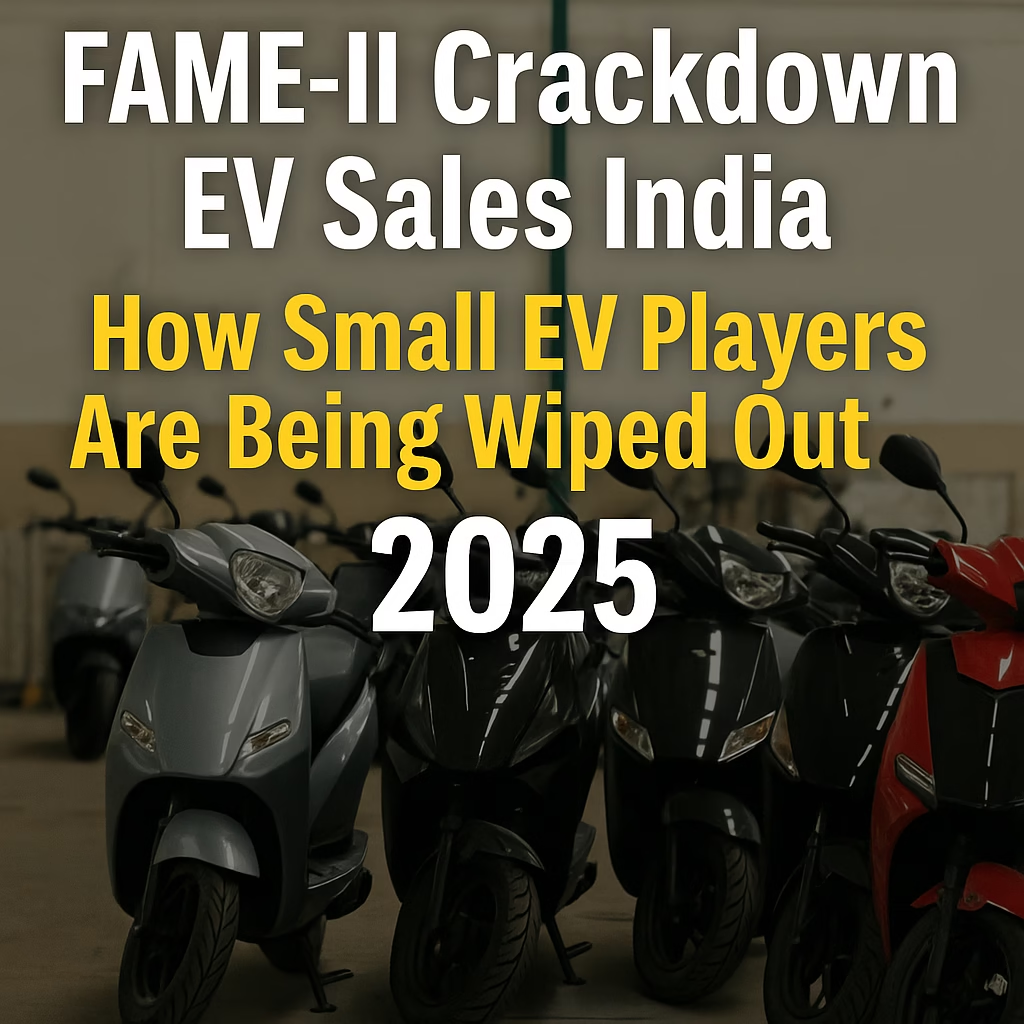
India’s electric vehicle (EV) sector, once a hotbed for innovation and investment, is now witnessing a dramatic shakeout. A recent government FAME-II Crackdown EV Sales has led to a collapse in sales, disproportionately affecting smaller players.
While big brands like Ola Electric, TVS, and Ather Energy are still expanding, many mid-sized and startup OEMs (Original Equipment Manufacturers) have either scaled down operations or shut entirely. FAME-II Crackdown EV Sales India 2025: Small EV Startups Shut Down.
🔍 What is FAME-II, and why is it causing a storm?
Launched in 2019, FAME-II was India’s ambitious ₹10,000 crore subsidy program to encourage EV adoption. It aimed to make electric scooters, motorcycles, and three-wheelers more affordable by offering government incentives to manufacturers who met strict eligibility guidelines—including local sourcing, battery specs, and pricing transparency.
However, between late 2023 and 2024, the Ministry of Heavy Industries uncovered multiple violations leading to FAME-II Crackdown EV Sales India 2025: Small EV Startups Shut Down:
- Some manufacturers were over-invoicing vehicle prices to claim higher subsidies.
- Others sourced critical parts like batteries from unauthorized or foreign suppliers, violating the localization norms.
This triggered a nationwide compliance drive that saw subsidy claims worth over ₹500 crore being withheld.
🔗 External Source: FAME-II Policy Details – Ministry of Heavy Industries
📉 Impact of FAME-II Crackdown EV Sales India on Smaller Players
The effect was immediate and severe. According to Vahan data, electric two-wheeler sales fell by over 34% in Q2 2025 compared to the same quarter last year.
Due to the FAME-II Crackdown EV Sales, brands like Benling and Revolt Motors are facing operational shutdowns and declining market share.
- Retrospective penalties and frozen subsidy claims.
- Reduced working capital.
- Loss of consumer trust.
- Halted production or scaled-down distribution networks.
Meanwhile, Ola Electric managed to soften the impact. The company recently announced a 14% quarterly increase in sales, citing positive EBITDA margins and growing investor confidence.
📌 Internal Read: TVS X Electric Scooter Review 2025—Specs, Range & Price
🛠️ What Are EV Startups Doing to Survive the Shakeup?
Despite the storm, some players are adapting. Analysts believe that the FAME-II crackdown on EV sales in India has created a long-term opportunity for more transparent and compliant EV brands. As smaller brands adapt to survive the FAME-II crackdown EV sales India, models like Rorr EZ offer new hope through online channels
- Going D2C (Direct-to-Consumer):
Brands like Oben Electric are ditching traditional dealerships. Their new Rorr EZ model, for instance, is sold exclusively through Amazon, enabling faster distribution and lower overhead. 🔗 Oben Electric Launches Rorr EZ on Amazon - Pivoting to Swapping Infrastructure:
Battery-swapping start-ups like BatterySmart and Bounce Infinity are drawing investments as consumers seek low-cost, maintenance-free EV options. - Local Manufacturing Partnerships:
To meet FAME-II norms, many are exploring domestic cell manufacturing or localized component vendors to reduce compliance risk. But till that time, it would be a FAME-II Crackdown EV Sales India.
🌱 Is There a Silver Lining?
Yes. Experts believe the crackdown, while painful, will lead to a cleaner and more transparent EV ecosystem.
- Investor Confidence: Institutional investors prefer policy-compliant, scalable businesses.
- Technology Push: Startups now focus more on durability, safety, and performance than simply racing to launch.
- Better Regulation: The government is working on FAME-III, likely with better clarity on eligibility and disbursement mechanisms.
According to a recent report by Frost & Sullivan, the Indian electric two-wheeler market is still projected to grow at a CAGR of 26%, hitting 12 million annual units by 2030—but with fewer, stronger players.
Analysts agree the FAME-II crackdown EV sales India will reshape the industry for years to come.
In conclusion, the FAME-II crackdown on EV sales in India marks a turning point for the EV ecosystem, signaling the end of subsidy-dependent business models.
“As per the Vahan dashboard, EV sales in India fell sharply post-subsidy audits.”
📊 Summary Table: Winners & Losers
Industry veterans agree that the FAME-II crackdown EV sales India will likely cause long-term market consolidation.
| Company/Segment | Status Post FAME-II Crackdown |
|---|---|
| Ola Electric | Survived, growing in Q2 2025 |
| TVS iQube | Mild impact, still expanding |
| Benling India | Stalled operations |
| Revolt Motors | Downscaled |
| Oben Electric | Pivoted to online sales |
| Status Post: FAME-II Crackdown | Many shut down or paused |
Overall, the FAME-II crackdown EV sales India acts as a turning point in India’s EV growth story.
📌 FAQs
Q1: What is the FAME-II scheme in India?
FAME-II is a central government initiative offering subsidies to promote electric vehicle adoption through strict compliance with pricing, localization, and safety norms.
Q2: Why are smaller EV brands struggling in 2025?
Due to FAME-II audits revealing non-compliance, subsidies were blocked or reversed, which financially crippled many smaller EV manufacturers.
Q3: Are big brands affected too?
Not significantly. Companies like Ola Electric, Ather, and TVS already had systems to meet compliance, enabling them to survive and even grow.
Q4: What is FAME-III, and when is it expected?
FAME-III is the proposed successor to FAME-II, expected to roll out in 2026 with revised norms to simplify EV adoption and improve fund disbursement.
Q5: FAME-II Crackdown EV Sales in India in 2025, reasons?
Lots of reasons, most of them are stated above, but how it can be solved is still a big question.
⚠️ Disclaimer
This article is for informational purposes only. All insights are based on publicly available sources and should not be considered financial or regulatory advice. For accurate policy guidance, refer to heavyindustries.gov.in or consult EV policy experts.
Your article helped me a lot, is there any more related content? Thanks!
Thanks for sharing. I read many of your blog posts, cool, your blog is very good.
Hello just wanted to give you a brief heads up and let you know a few of the pictures aren’t loading correctly. I’m not sure why but I think its a linking issue. I’ve tried it in two different browsers and both show the same results.